
AISLA
The ITALIAN ALS ASSOCIATION – AISLA Onlus was founded in 1983 with the aim of becoming the national reference organization for the protection, care and support of people living with ALS, promoting awareness of the disease and encouraging the relevant institutions to provide patients with appropriate and qualified care.
AISLA is actively engaged throughout Italy in supporting people with ALS and their families. It supports research, training, information and care. Today, the Association has more than 2,000 members and 60 local branches across 19 regions, with the support of over 250 volunteers and 8 staff members.
NATIONAL ALS BIOBANK | AN ESSENTIAL PROJECT
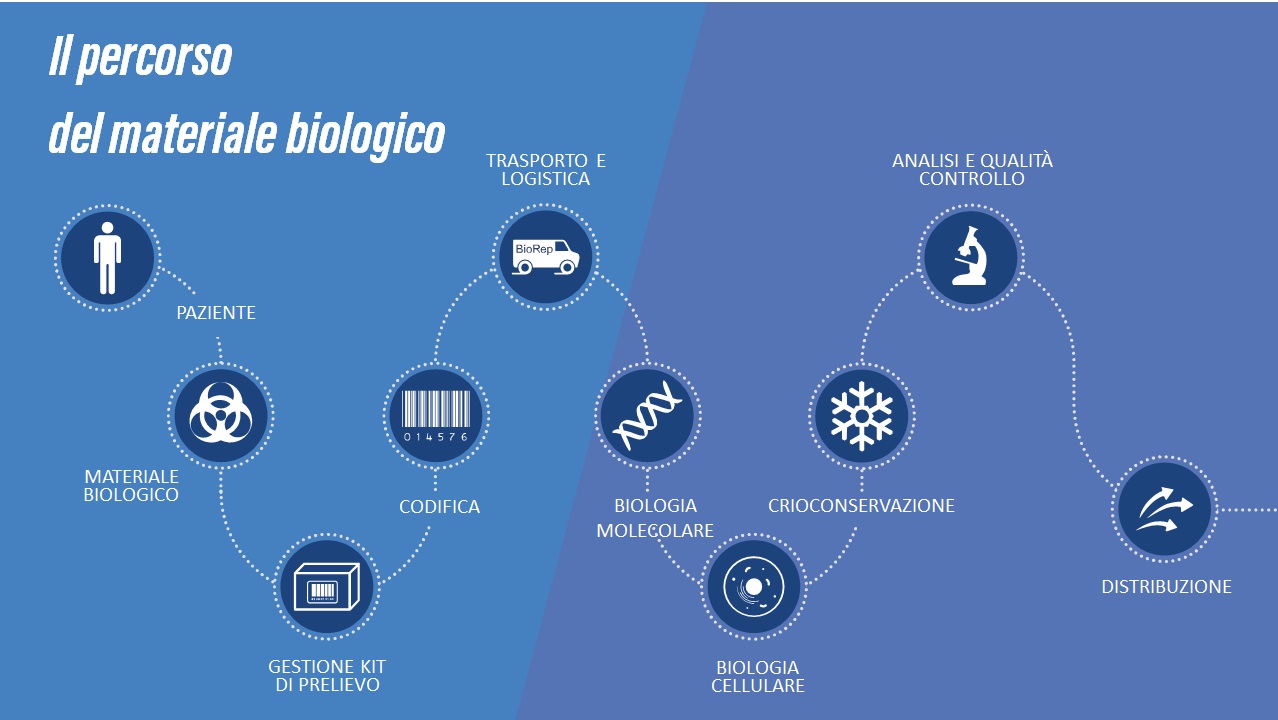
In 2015, AISLA Onlus launched a fundraising campaign to create a National Biobank capable of collecting and storing hundreds of thousands of biological samples from patients with Amyotrophic Lateral Sclerosis, recruited through as many centers as possible involved in clinical research on ALS.
In addition to collecting biological material, the project is aimed at gathering and studying clinical, epidemiological and genetic data, which will be made available to all Italian researchers, thereby helping to significantly accelerate research activities on amyotrophic lateral sclerosis, a degenerative disease that currently has no cure and whose causes are still only partly understood.
Although ALS research – focused on a disease that selectively affects a group of cells known as motor neurons, leading to the progressive paralysis of skeletal muscles – has made significant progress over the past 20 years, particularly thanks to discoveries in genetics, the limited availability of clinical and biological data, linked to the rarity of the disease, remains one of the main obstacles to scientific progress.
Biobanks are therefore essential for making biological material such as DNA, cells, plasma and cerebrospinal fluid, together with associated clinical data, available to researchers. These resources are invaluable for research, from basic science through to the testing of therapies and potential new drugs. Biological collections stored in biobanks can also be used to investigate the causes of rare genetic diseases and to develop new prevention and diagnostic tools.
Since there is still no centralized national biobank dedicated to ALS in Italy, AISLA has committed to making this service available to all researchers and clinicians who work every day to fight this disease.
Given the complexity of ALS, research is active across several areas in order to identify effective therapeutic strategies and new, reliable biomarkers, which are essential both for diagnosis and for assessing disease progression.
- Genetics – discovery of new disease-causing mutations in order to identify new targets for gene therapy, using treatments that modulate the expression of altered genes. In light of the results obtained in other neuromuscular diseases, such as SMA and amyloid polyneuropathy, this approach represents one of the most promising strategies.
- Diagnosis and prognosis – identification of potential diagnostic markers, both biological, such as neurofilament analysis in cerebrospinal fluid and blood, and instrumental, such as MRI.
- Pathophysiological mechanisms – identification of new therapeutic targets for biochemical treatments, using drugs that interfere with cellular functions believed to play a role in motor neuron degeneration, such as:
- Excitotoxicity and oxidative stress
- RNA metabolism
- Protein quality control and aggregation
- Function of specific proteins and axonal transport
- Inflammation and immunity in the nervous system
OBJECTIVES OF THE NATIONAL ALS BIOBANK
- to standardize the collection, processing and storage of samples from ALS patients in order to ensure their quality;
- to ensure the availability of biological material suitable for the evolving needs of scientific research as knowledge of the disease advances;
- to promote communication and exchange among different Italian ALS research groups.
SUCCESS AND INNOVATION FACTORS
- Progress in scientific research toward a therapy for ALS requires access to large numbers of biological samples.
- Collections must no longer be spontaneous, but institutional, organized and certified according to standardized procedures that ensure the best possible conditions for accelerating the translation of research from the laboratory to the patient.
- A nationwide project based on the participation of all Italian ALS Clinical Centers and on the involvement and support of local healthcare facilities, in order to ensure the effectiveness and continuity of sample collection activities.
There are approximately 6,000 people living with ALS in Italy, corresponding to around 1 in 10,000 people, distributed fairly evenly across the country. Within the catchment area of a local hospital, there are approximately 20–25 residents affected by the disease.
The National ALS Biobank aims to support the collection of biological samples by also involving more peripheral and less structured clinical centers. For this reason, biological sample collection is a strongly territory-based project that supports activities of significant value to scientific research without concentrating resources in only a small number of centers of excellence.
CONTACTS: biobanca@aisla.it