
Michael J. Fox Foundation

Parkinson’s disease is a degenerative disorder of the central nervous system. The degeneration of dopaminergic cells in the substantia nigra, a nucleus located in the midbrain, leads to the onset of the motor symptoms associated with Parkinson’s disease. The reason why this process occurs is currently unknown.
The main symptoms of Parkinson’s disease include rigidity, tremor, bradykinesia and difficulty walking. In the advanced stages of the disease, affected individuals may also experience cognitive impairment and behavioral problems.
Researchers have shown that the disease is characterized by the accumulation of a protein called alpha-synuclein in dense structures known as Lewy bodies. Their distribution is unpredictable and varies from person to person, although they are found in all patients with Parkinson’s disease. Today, more than 5 million people worldwide are affected by Parkinson’s disease.
In recent years, research has made significant progress in understanding the role of genetics in Parkinson’s disease. Currently, only 5% of cases are attributed to genetic factors; however, studies involving genes such as alpha-synuclein and Leucine-Rich Repeat Kinase 2 (LRRK2) support the emerging hypothesis that genetics may play a much more significant role than previously believed.
One of the priorities of the Michael J. Fox Foundation (MJFF) is to guide and promote research into these genetic targets, with the aim of gaining a better understanding of the origin and progression of Parkinson’s disease. By supporting research projects focused on LRRK2 and alpha-synuclein, the Foundation aims to identify treatments as quickly as possible that could benefit all patients, not only those carrying specific mutations.
MJFF is currently funding two projects in which BioRep is involved: a major biomarker research project called the Parkinson’s Progression Markers Initiative (PPMI) and a clinical consortium focused on LRRK2 called the LRRK2 Cohort Consortium.
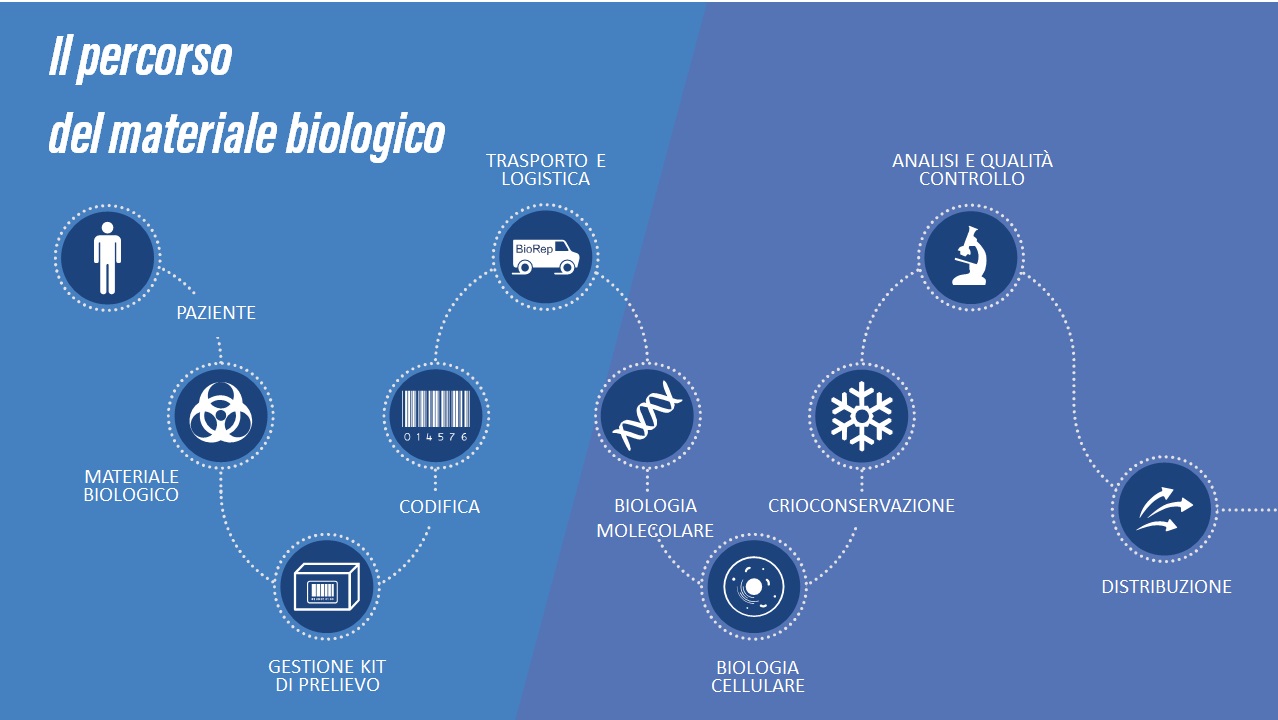
Within this framework, BioRep acts as the biorepository for both projects, organizing and monitoring the shipment of sample collection kits throughout Europe. BioRep is also responsible for processing and distributing biological material and provides its storage platform, ensuring the highest levels of quality and safety at every stage.

The PPMI project is an observational clinical study aimed at identifying biological markers of Parkinson’s disease progression, a crucial step toward developing treatments that go beyond symptom management and may help slow or halt the progression of the disease itself.
Clinical data relating to both motor and non-motor symptoms are collected through brain SPECT imaging and the collection of biological fluids, including blood, urine, and cerebrospinal fluid.
All of this valuable information will then be made available and accessible to the entire scientific community involved in Parkinson’s disease research.
The active European collection sites participating in the PPMI project are shown on the map.

By collecting information from more than 3,000 people across 20 clinical centers worldwide, the LRRK2 Cohort Consortium represents one of the initiatives supported by MJFF to accelerate the development of Parkinson’s disease therapies specifically targeting LRRK2.
Different cohorts are assembled and followed over time to gain a better understanding of the clinical characteristics of LRRK2-associated parkinsonism. By building a network of patients and their families and progressively collecting clinical data on these specific forms of Parkinson’s disease, MJFF aims to facilitate the design and implementation of clinical trials capable of delivering clear results once promising and effective treatments have been identified.
The second map below shows the European collection sites participating in the LRRK2 project.